
A Chili and Hot Sauce Glossary: Essential Terms Every Beginner Should Know
From SHU to lacto-fermentation to pepper mash — this beginner-friendly glossary decodes the essential vocabulary of chili peppers and hot sauce making.
From SHU to lacto-fermentation to pepper mash — this beginner-friendly glossary decodes the essential vocabulary of chili peppers and hot sauce making.
Eating spicy food triggers a real physiological alarm: capsaicin hijacks your body’s heat-sensing TRPV1 receptors, setting off a chain reaction that floods your nose and eyes.
Discover why the burn of a chili pepper is a pain signal, not a flavour, and how this science unlocks a richer world of pepper tasting notes.
From capsaicin concentration to Maillard reactions, discover the real chemistry behind why fresh and dried chilis taste — and burn — so differently.
Pepper X holds the Guinness World Record as the hottest chili ever measured at 2,693,000 SHU. Discover how Ed Currie bred it over a decade of secretive crossbreeding.
Capsaicin, the compound behind chili heat, is linked to lower mortality, better gut health, and FDA-approved pain relief — here is what the science actually shows.
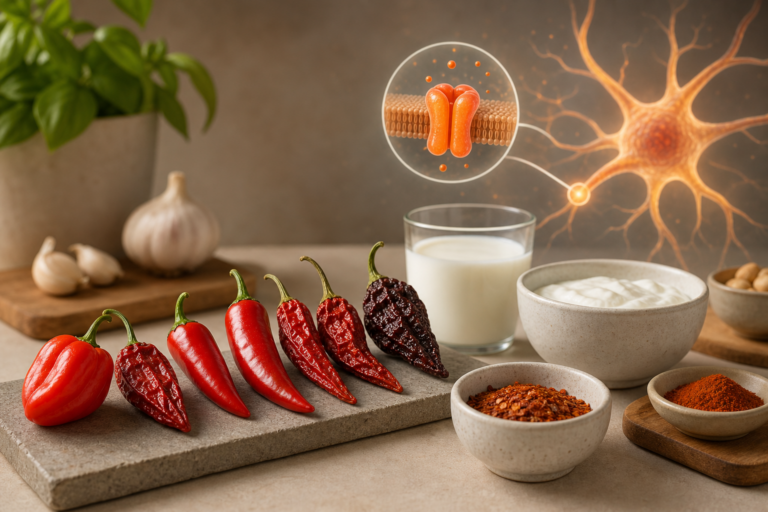
The burning from a chilli is a neural illusion produced by one protein — TRPV1. Here’s how that receptor desensitises, and how to train it safely.
Capsaicin gets all the blame for spicy heat, but it’s one member of a whole family of compounds. Here’s how the chemistry of capsaicinoids really works.
Gardeners have long claimed that withholding water makes chili peppers hotter. Here’s what the peer-reviewed research on capsaicin biosynthesis actually shows.
From jalapeños to Pepper X, discover how Scoville Heat Units are measured, what capsaicin does in your body, and what those SHU numbers really tell you.