
Real Wasabi vs. Horseradish Paste: What’s Actually in That Green Blob?
That bright-green paste on your sushi plate is almost certainly horseradish. Here’s what’s in it, how real wasabi differs, and how to spot the genuine thing.
That bright-green paste on your sushi plate is almost certainly horseradish. Here’s what’s in it, how real wasabi differs, and how to spot the genuine thing.
From SHU to lacto-fermentation to pepper mash — this beginner-friendly glossary decodes the essential vocabulary of chili peppers and hot sauce making.
Eating spicy food triggers a real physiological alarm: capsaicin hijacks your body’s heat-sensing TRPV1 receptors, setting off a chain reaction that floods your nose and eyes.
Discover why the burn of a chili pepper is a pain signal, not a flavour, and how this science unlocks a richer world of pepper tasting notes.
From capsaicin concentration to Maillard reactions, discover the real chemistry behind why fresh and dried chilis taste — and burn — so differently.
Pepper X holds the Guinness World Record as the hottest chili ever measured at 2,693,000 SHU. Discover how Ed Currie bred it over a decade of secretive crossbreeding.
From Louisiana vinegar sauces to Korean gochujang and Tunisian harissa, discover how chili pepper traditions evolved — and why they taste so different — across every corner of the world.
Capsaicin, the compound behind chili heat, is linked to lower mortality, better gut health, and FDA-approved pain relief — here is what the science actually shows.
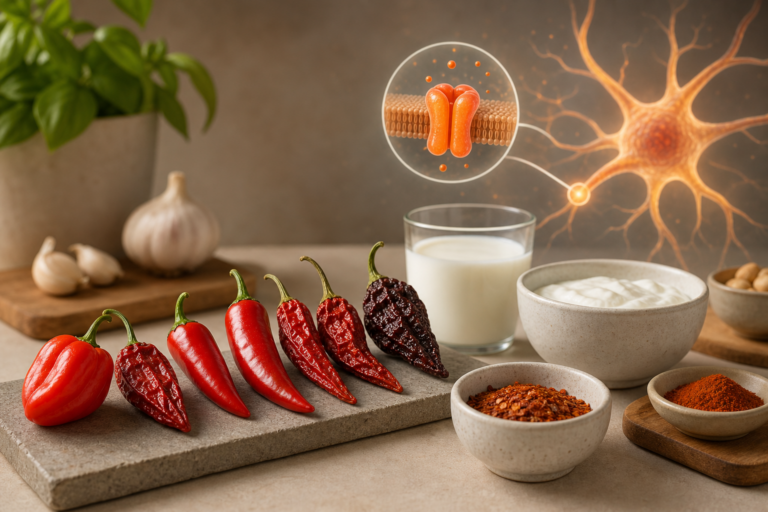
The burning from a chilli is a neural illusion produced by one protein — TRPV1. Here’s how that receptor desensitises, and how to train it safely.
Capsaicin gets all the blame for spicy heat, but it’s one member of a whole family of compounds. Here’s how the chemistry of capsaicinoids really works.