A Beginner’s Guide to the World’s Hottest Peppers: SHU Rankings Explained
Few things in the culinary world spark as much awe — and occasional alarm — as the planet’s hottest peppers. What began as a backyard curiosity has evolved into a competitive, science-backed pursuit of heat so intense that handling the pods safely requires protective gloves and good ventilation.
The Scoville Scale: How We Measure Heat
Before diving into the peppers themselves, it helps to understand how heat is quantified. In 1912, pharmacist Wilbur Scoville devised a method to measure a pepper’s pungency: dried pepper extract was dissolved in alcohol, then progressively diluted in sugar water until a panel of five tasters could no longer detect any burn. The number of dilutions required became the pepper’s Scoville Heat Unit (SHU) rating.
Today, scientists rely on a far more objective technique — High-Performance Liquid Chromatography (HPLC) — which directly measures the concentration of capsaicinoids, the family of compounds responsible for the burning sensation, and converts those readings into SHU. Because growing conditions such as soil temperature, humidity, and even plant stress affect capsaicin production, most peppers carry a range of values rather than a single fixed number.
Putting the Scale in Perspective
To appreciate just how extreme superhot peppers are, a quick comparison across the scale is useful:
- Bell pepper: 0 SHU — no detectable heat whatsoever
- Jalapeño: 2,500–8,000 SHU — the everyday benchmark for mild spice
- Habanero: 100,000–350,000 SHU — genuinely hot but manageable for experienced eaters
- Ghost Pepper: 855,000–1,041,427 SHU — the original one-million-SHU milestone
In the pepper community, anything that clears 1,000,000 SHU is classified as a superhot. To put that threshold in perspective: a single superhot pod contains enough capsaicin to register as a burn even when diluted more than a million times in water.
The Gateway to Superhot Territory: Ghost Pepper
The Bhut Jolokia — widely known as the Ghost Pepper — holds a special place in chili history. When Guinness World Records certified it as the world’s hottest pepper in 2007, it became the first variety ever verified past the one-million-SHU barrier. Native to northeastern India, where it has long featured in traditional cuisine, the Ghost Pepper delivers a slow, creeping burn that can take up to 30 seconds to fully develop — making it dangerously easy to underestimate on first bite. Its cultural and scientific significance as the original “gateway superhot” is hard to overstate; it proved to breeders that the ceiling was far higher than anyone had previously imagined.
The Seven-Pot Family and Trinidad Scorpions
The Caribbean island of Trinidad has contributed a remarkable number of record-flirting varieties to the superhot world. The Trinidad 7 Pot family takes its name from the folk claim that a single pod can season seven pots of stew. Different cultivars within the family span a wide range, with the 7 Pot Douglah — identifiable by its dark chocolate-brown skin — reaching as high as 1,853,986 SHU in verified tests. Tasters note an earthy, nutty sweetness that precedes the fire, making it one of the more flavourful entries in the superhot category.
The Trinidad Moruga Scorpion is another standout, peaking near 2,000,000 SHU in university testing conducted in 2012. Its deceptive quality is well documented: a first impression of fruity sweetness gives way to wave after wave of building heat, a pattern that earns it particular respect — and wariness — among seasoned chili enthusiasts.
The Carolina Reaper: A Decade at the Top
Developed by Ed Currie of the PuckerButt Pepper Company in Fort Mill, South Carolina, the Carolina Reaper claimed the Guinness World Record for the world’s hottest pepper in 2013, certified at an average of 1,641,183 SHU with individual pods testing as high as 2,200,000 SHU. Its wrinkled red exterior and small pointed tail made it instantly recognisable, and its underlying fruity flavour — buried beneath searing heat — made it a favourite for extreme hot sauce producers worldwide.
The Reaper held its crown for a full decade, an unusually long reign in the fast-moving world of competitive pepper breeding, before being surpassed by its own creator.
Pepper X: The Current Guinness Record Holder
In October 2023, Guinness World Records officially crowned a new champion: Pepper X, again the work of Ed Currie, developed through more than ten years of selective breeding. Certified at an average of 2,693,000 SHU — roughly 1.5 times hotter than the Carolina Reaper — Pepper X produces greenish-yellow pods with an earthy, dusky flavour that transitions rapidly into an overwhelming and long-lasting burn. Unlike many record-breaking varieties, seeds for Pepper X have not been released to the public; as of 2026, the pepper is available only indirectly, through Currie’s “The Last Dab” hot sauce.
Notable Contenders and What May Come Next
The record books may not remain settled for long. Several other extreme varieties are generating buzz in the pepper community, though none has yet received Guinness certification:
- Dragon’s Breath: Developed through a collaboration between Welsh grower Mike Smith, Nottingham Trent University, and fertiliser company NPK Technology, this pepper was originally created to test a specialist plant nutrient formula — not to chase records. It was entered in the Chelsea Flower Show in 2017 and later tested at approximately 2,480,000 SHU. That figure would place it among the hottest peppers ever measured, but Guinness has not officially verified the claim.
- Chocolate Bhutlah: A Wisconsin-developed cross between the Ghost Pepper and the 7 Pot Douglah, informally measured at around 2,000,000 SHU and notorious for an intense, prolonged burn that builds steadily rather than peaking and fading.
- Apollo Pepper: Another Ed Currie project, this one crossing Pepper X with the Carolina Reaper. Reported heat exceeds 3,000,000 SHU, which would shatter the current record if submitted for independent certification.
Handling Superhots Safely
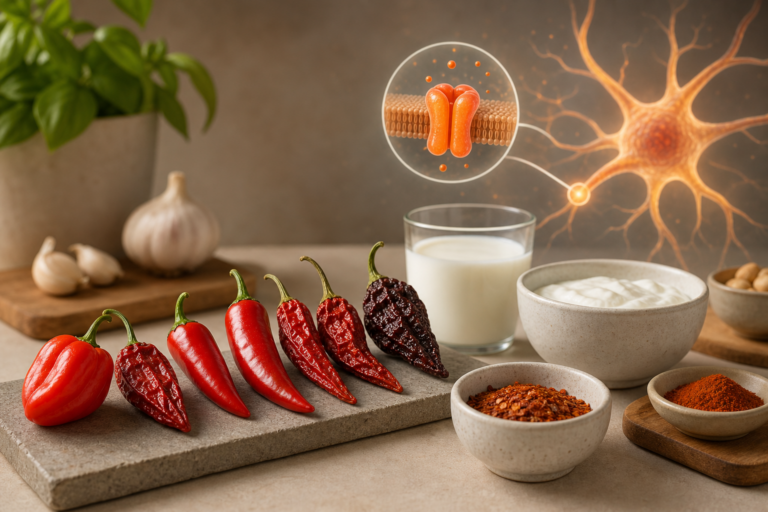
If you plan to cook with any pepper above 1,000,000 SHU, a few precautions are non-negotiable. Capsaicin is oil-based, meaning it binds tenaciously to skin and mucous membranes and is not removed effectively by water alone. Nitrile gloves, eye protection, and good kitchen ventilation are essential when cutting or processing superhot pods. If you do experience intense burning, reach for dairy: the casein protein in milk or yogurt chemically binds to capsaicin molecules and helps clear them from pain receptors far more effectively than water or soft drinks.
Consuming whole superhot pods as a dare is strongly discouraged. Documented cases of severe nausea, vomiting, and emergency room visits have followed whole-pod consumption at Carolina Reaper levels and above.
FAQ
What does “SHU” actually stand for?
SHU stands for Scoville Heat Unit, the standard measure of a pepper’s pungency, named after pharmacist Wilbur Scoville who developed the original testing method in 1912. Modern SHU ratings are produced using High-Performance Liquid Chromatography (HPLC), which measures capsaicinoid concentrations far more precisely and repeatably than the original human taste-panel approach.
Is Pepper X available to buy?
As of 2026, Pepper X seeds have not been released commercially. Ed Currie has kept the genetics closely guarded since the pepper was certified by Guinness in October 2023. The closest most people will get is “The Last Dab” hot sauce line, which uses Pepper X as a primary ingredient.
What is the best way to cool down after eating a superhot pepper?
Dairy products are your best friend: milk, yogurt, sour cream, or ice cream all contain casein protein, which binds to capsaicin molecules and helps clear them from the pain receptors in your mouth. Water, beer, and fizzy drinks spread the oil-based capsaicin around without neutralising the burn and often make things worse.
Can a superhot pepper actually cause physical harm?
For most healthy adults, the experience is temporarily agonising but not dangerous — the burn is a nerve reaction caused by capsaicin triggering the same TRPV1 pain receptor that responds to genuine heat. However, serious complications including severe vomiting and hospital admissions have been documented after the consumption of whole superhot pods. People with gastrointestinal conditions, cardiovascular concerns, or low spice tolerance should exercise real caution before experimenting with anything above the 500,000 SHU range.
Sources
- pepperscale.com
- growhotpeppers.com
- chilipeppermadness.com
- en.wikipedia.org
- knowthepepper.com
- pepperjoe.com
- foodrepublic.com
- casaflake.com
Related Articles